
Glutathione plant tripeptide subunit
Continuing the discussion on the application of amino acid agriculture, a particular tripeptide - glutathione (GSH) - is introduced.
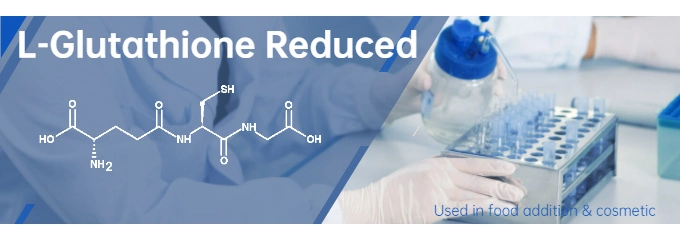
Unlike the aforementioned single amino acids (proline, hydroxyproline, glycine), glutathione is formed by the connection of three amino acids - glutamic acid, cysteine and glycine - through peptide bonds.
It is the most important endogenous antioxidant molecule in plants and is hailed as the "cellular defense line" for crop stress resistance.
Structure of Glutathione
Molecular structure: Ingenious design of a tripeptide
The core function of glutathione lies in the reactive thiol (-SH) provided by the cysteine residue.
This thiol has extremely strong reducing properties and serves as the "reaction center" for eliminating reactive oxygen species (ROS).
After oxidation, two glutathione molecules form a disulfide bond and connect to form oxidized glutathione.
Under the catalysis of glutathione reductase, it can be recycled and regenerated into glutathione, forming a sustainable "oxidation-reduction cycle" system.
Agricultural Function: Four Core Functions
1. Antioxidant defense
It removes reactive oxygen species such as superoxide anions and hydrogen peroxide, protecting cell membrane lipids, proteins and nucleic acids from oxidative damage.
Under adverse environmental stresses such as drought, salinity, high temperature and low temperature, exogenous application of glutathione can significantly enhance the activity of antioxidant enzymes in crops.
2. Stress Resistance Response
Reduce lipid peroxidation and electrolyte leakage caused by low temperature, maintain cell membrane stability;
Improve water utilization efficiency under salt stress;
Promote the synthesis of plant chelating agents, enhance tolerance and detoxification ability to heavy metals.
3. Promote growth and development
Increase chlorophyll content and the stability of photosynthetic pigments, enhance photosynthesis;
Promote flower bud differentiation and fruit set rate;
Increase fruit weight and per plant yield.
Studies have shown that oxidized glutathione also has the effect of increasing the number of plant seeds or flowers, and promoting lateral buds or growth.
4. Improve quality
Increase the content of soluble solids, vitamin C and other nutrients in the fruits, reduce the nitrate content, and enhance the quality and market value of agricultural products.
Differentiated positioning: Agricultural application practice
1. Leaf spraying
Spraying a 5-20 ppm glutathione solution on the leaves can directly increase the level of glutathione in the plant cells, achieving a "preventive protection" or "emergency rescue" effect.
When used in combination with organic acids with pKa values ranging from 3.2 to 9.0 (pKa is the negative logarithm of the acid dissociation constant (Ka), which is used to measure the strength of an acid), it can significantly enhance the leaf absorption efficiency.
2. Drip irrigation application
Apply 1-5 ppm glutathione solution by drip irrigation.
The higher the dosage, the more obvious the effect.
It can be compounded with compounds such as carbendazim sodium and brassinolide to exert a synergistic and enhancing effect.
3. In synergy with short-chain peptides
Short-chain peptides have a small molecular weight and can rapidly pass through the cell membrane to activate defense signals and provide raw materials for glutathione synthesis;
Glutathione is responsible for eliminating free radicals and maintaining antioxidant capacity.
The combination of the two forms a closed-loop system of "rapid response + in-depth repair".
4. Microbial agent induction
By applying specific beneficial microorganisms and allowing them to colonize the plant roots, it induces the plant to synthesize more endogenous glutathione on its own, thereby fundamentally enhancing the crop's stress resistance.
Key points for use
The application is most effective before or during the early stage of adversity, providing preventive protection.
Leaf spraying should be carried out in the early morning or evening to avoid high-temperature periods.
Combined with organic acids, it can improve absorption efficiency, and combined with short-chain peptides, it can enhance the repair effect.
GSSG (oxidized form) has a more significant effect in promoting growth, while GSH (reduced form) has stronger activity in antioxidant function.
From the osmotic regulation of proline, the structural support of hydroxyproline, the chelation transport of glycine, to the antioxidant defense of glutathione - these four amino acids/peptides each perform their own tasks in agriculture, and often work together in coordination.
Glutathione represents the wisdom of "preventing diseases before they occur" and "enhancing physical fitness":
by strengthening the inherent vitality of crops rather than forcibly altering their growth trajectory, this is precisely the important path for green agriculture to move towards sustainable development.
Related products


Related news
-
How to choose between NAC and glutathione?
2026-07-13 -
Ellagic acid and glutathione-based melanin regulatory pathway
2026-07-20 -
Reprogramming glutathione-binding proteins using engineered glutathione-type cofactors
2026-07-27 -
Glutathione: Detoxification and Liver-Care Expert Hidden Within Human Body
2026-08-03
