
Reprogramming glutathione-binding proteins using engineered glutathione-type cofactors
The corresponding author is the team led by Professor Liang Yong and Professor Pan Huijie from the School of Chemistry and Chemical Engineering of Nanjing University.
The team has previously developed an NAD-type artificial cofactor system - by retaining the protein binding region of the natural cofactor and replacing the functional units, they were able to directly reprogram multiple NAD-binding proteins into artificial photolyases.
To verify the universality of the cofactor engineering strategy, the team further extended this design to the glutathione (GSH) system, which is a widely existing class of cofactors.
Glutathione-type cofactor and GST protein can be reversibly assembled.
The research team used the ubiquitous tripeptide glutathione in living organisms as the backbone, and selectively modified the benzophenone photosensitive unit with the chemical selectivity of its thiol group to obtain the photoactive cofactor GS-Bp1.
This cofactor can, like natural glutathione, reversibly bind to the active pocket of glutathione S-transferase (GST) through specific weak interactions.
Without the need for complex gene editing or covalent modification of proteins, the GST protein, which originally lacked photocatalytic function, can be directly reprogrammed into an artificial photosynthetic enzyme to catalyze the intramolecular [2+2] photolytic addition of sulfonamide substrates, precisely constructing a chiral bicyclic sulfonamide framework.
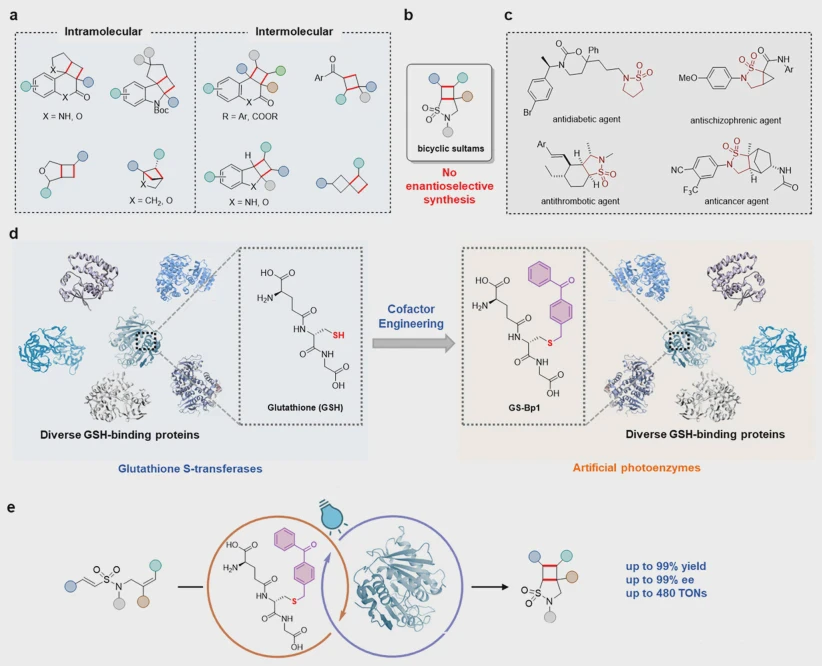
Figure 1: Schematic Diagram of Research Background and Overall Strategy
(a-c) The existing asymmetric [2+2] reaction and the unsolved challenge of synthesizing sulfonamide compounds;
(d) The design concept for engineering reprogramming of GST proteins using glutathione-type cofactors;
(e) The asymmetric synthesis of chiral bicyclic sulfonamide achieved in this work;
Protein screening and directed evolution: Gradual improvement in performance
The study used the intramolecular [2+2] cyclization of the sulfonamide substrate 1a as a model, and systematically screened 19 different sources of GST family proteins in combination with two glutathione-type cofactors.
The results show that the isolated GS-Bp1 has only a weak reactivity and no enantioselectivity.
After assembly with different GST proteins, the reaction activity and stereoselectivity showed significant protein dependence.
Among them, the combination of human hGST A1-1 and GS-Bp1 showed the best performance, resulting in an initial yield of 38% and an ee of 67%.
The isolated hGST A1-1 has no catalytic activity, which directly proves that the cofactor - protein assembly is the core of reaction activity and stereoscopic control.
Subsequently, the team analyzed the binding mode of the cofactor in the active pocket through molecular dynamics simulation, identified key sites such as F226, L219, V117, and L113, and carried out directed evolution optimization:
L113V mutation: The enantiomeric selectivity has been enhanced from 67% ee to 85% ee;
Superimposed V117I mutation: The yield recovered to 49%, and the ee value further increased to 89%.
Furthermore, introducing the L219I mutation: the yield is 51%, and the enantiomeric excess (ee) reaches 92%.
After optimizing the reaction conditions including the buffer system, pH, and solubilizer, the final optimal system achieved a yield of 90% and a diastereoselectivity of 97% for the target product.
Moreover, the reaction can be carried out in the presence of air, without the need for strict anaerobic conditions.
Substrate universality: Efficiency far exceeds that of small molecule catalysts
Under the optimal conditions, the team system examined the applicable range of the substrate:
Substitution on the benzene ring: Excellent compatibility with alkyl groups and electron-donating groups;
The electron-withdrawing halogens show a slight decrease in reactivity as the atomic radius increases, but the enantiomeric selectivity remains largely unchanged.
Ring size expansion: The enantiomeric selectivity of the six-membered ring sulfonamide product is as high as 98%, while the seven-membered ring shows no reactivity due to excessive ring strain.
Heterocyclic substrates: Pyrazoles, thiophenes, furans and other aromatic rings are all compatible, with the highest enantiomeric selectivity reaching 99%.
Structural effect: The NH site of the sulfonamide is crucial for catalysis. Alkylating modification will lead to a significant decrease in activity and selectivity.
In terms of catalytic efficiency, the reaction rate of this artificial photocatalyst is two orders of magnitude higher than that of the simple benzophenone small molecule catalyst.
The optimal substrate conversion number (TON) can reach 480, fully demonstrating the significant gain effect of the protein microenvironment on the photocatalytic process.
Mechanism verification: excited-state protective effect of protein pockets
The research, through multi-dimensional experiments, revealed the mechanism of the system's operation:
Combining affinity: Isothermal titration calorimetry tests showed that the dissociation constant of GS-Bp1 and hGST A1-1 was at the micromolar level, and the binding capacity was stronger than that of natural glutathione, proving that the modified cofactor can efficiently bind to the protein active pocket.
Excited state properties: The excited state lifetime of the free GS-Bp1 will be significantly quenched by oxygen;
After being assembled into the protein pocket, the oxygen quenching effect significantly weakened.
This directly explains the oxygen tolerance of the reaction - the protein hydrophobic pocket provides a "micro-environment" to the excited state, reducing the inactivation effect of oxygen.
Kinetic verification: The reactivity of the free cofactor is extremely low, but it significantly increases after the assembly of the protein.
Changing the ratio of protein to cofactor leads to a monotonic change in the reaction rate, further proving that the catalytic activity comes from the assembled complex rather than the free cofactor.
The study also pointed out that the current system is limited by protein precipitation under light and the photodegradation of cofactors.
There is still room for improvement in terms of long-term stability.
The performance improvement brought about by directed evolution does not stem from an increase in protein thermal stability, but rather from the precise optimization of the microenvironment of the active pocket.
Non-covalent interactions achieve stereoscopic control through re-equilibration.
To uncover the molecular origin of enantiomeric selectivity, the team conducted in-depth research by combining molecular docking, molecular dynamics simulations and DFT calculations.
The results indicate that the formation of C1-C4 bonds is the rate-determining step of the reaction, and multiple non-covalent interactions within the active pocket jointly regulate the stability of the transition state.
In the wild-type protein, the π-π stacking interaction between the substrate and the cofactor, as well as the F226 residue, primarily stabilizes the S conformation of the transition state.
However, the dispersion effects of the 113th and 117th residues on the R configuration transition state partially counteract this advantage, thus resulting in moderate enantiomeric selectivity in the wild-type.
After directed evolution, the L113V and V117I mutations selectively weakened the dispersion stabilizing effect on the R conformation transition state, while slightly enhancing the dispersion contribution of the S conformation, re-balance the weights of π-π stacking and dispersion effects, and continuously expand the energy advantage of the S conformation transition state, ultimately achieving a step-by-step improvement in enantiomeric selectivity.
This mechanism clearly demonstrates that protein evolution can achieve precise three-dimensional control of highly active excited-state reactions by fine-tuning the weak interactions in the active pocket.
This paper has developed a new system of glutathione-GST artificial photocatalase, and for the first time achieved enantioselective [2+2] photolytic addition of bicyclic sulfoneimide, featuring high activity, high enantioselectivity and oxygen tolerance.
The catalytic efficiency is far superior to that of traditional small molecule photosensitizers.
This work expanded the cofactor engineering strategy from the classic coenzyme NAD+ to cofactor-like molecules such as glutathione, and verified the universality of this design:
By retaining the protein binding properties of natural molecules and replacing the functional units, the vast family of natural proteins can be reprogrammed into functional artificial enzymes.
This reversible assembly mode possesses the advantages of modularity, easy screening and interchangeability, providing a universal new paradigm for expanding the non-natural reaction space of enzymes and constructing complex biocatalytic systems.
Source: https://doi.org/10.1021/jacs.6c05795
Prev: Ellagic acid and glutathione-based melanin regulatory pathway
Next: Glutathione: Detoxification and Liver-Care Expert Hidden Within Human Body


