
role of NAD+ in aging-related diseases and its clinical applications
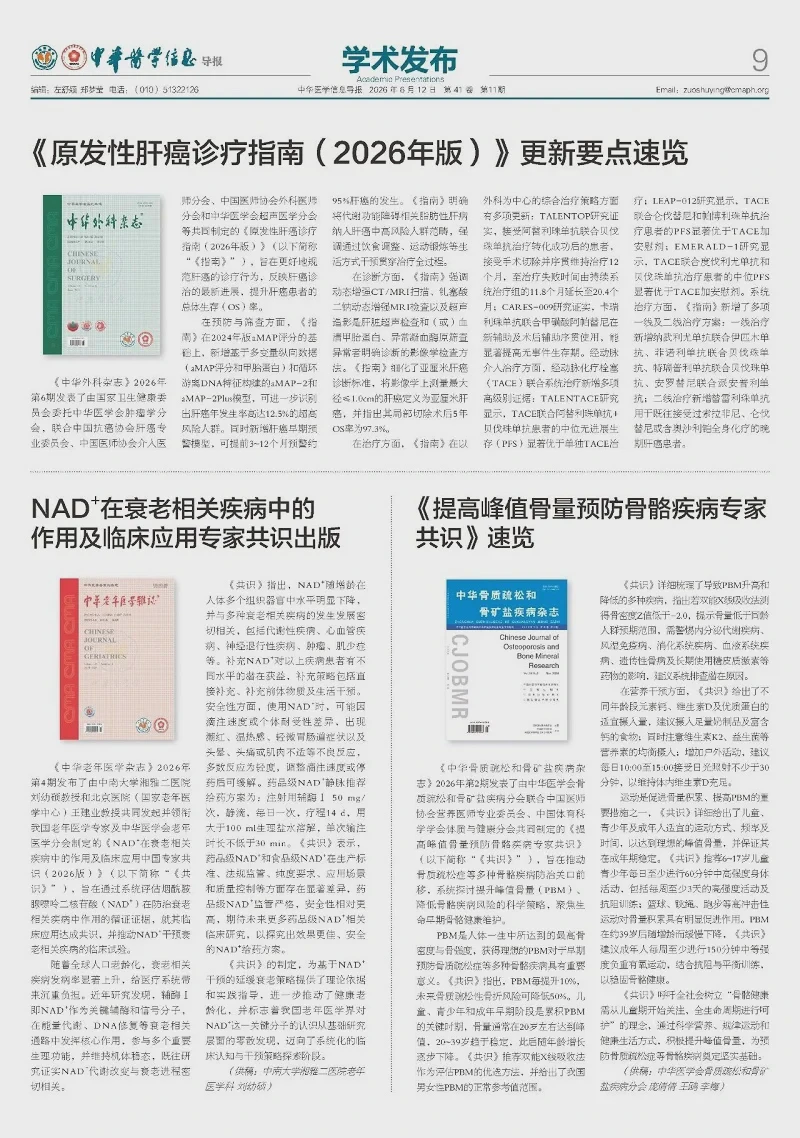
The "Chinese Journal of Geriatrics" published in its April 2026 issue released the "Chinese Expert Consensus on the Role and Clinical Application of NAD+ in Aging-related Diseases (2026 Edition)" (hereinafter referred to as the "Consensus"), which was jointly initiated and led by Professor Liu Youshuo from Xiangya Hospital of Central South University and Professor Wang Jianye from Beijing Hospital (China Geriatric Medical Center), along with Chinese geriatric medicine experts and the Geriatric Medicine Branch of the Chinese Medical Association.
The aim is to systematically evaluate the evidence-based evidence of the role of nicotinamide adenine dinucleotide (NAD+) in preventing and treating aging-related diseases, reach a consensus on its clinical application, and promote clinical trials of NAD+ intervention in aging-related diseases.
With the global population aging, the incidence of aging-related diseases has significantly increased, placing a heavy burden on the medical system.
Recent studies have shown that coenzyme I, namely NAD+, acts as a key coenzyme and signaling molecule, playing a central role in aging-related pathways such as energy metabolism and DNA repair.
It participates in multiple important physiological functions and maintains the homeostasis of the body.
Previous research has confirmed that changes in NAD+ metabolism are closely related to the aging process.
The "Consensus" states that the level of NAD+ significantly decreases in multiple tissues and organs of the human body with aging, and it is closely related to the occurrence and development of various aging-related diseases, including metabolic diseases, cardiovascular diseases, neurodegenerative diseases, tumors, and sarcopenia.
Supplementation of NAD+ may offer different levels of potential benefits to patients with the above-mentioned diseases.
The supplementation strategies include direct supplementation, supplementation of precursor substances, and lifestyle interventions.
In terms of safety, when using NAD+, adverse reactions such as flushing, warmth sensation, mild gastrointestinal symptoms, dizziness, headache or muscle discomfort may occur due to differences in infusion speed or individual tolerance.
Most of these reactions are mild and can be alleviated by adjusting the infusion speed or discontinuing the medication.
The recommended intravenous administration regimen for pharmaceutical-grade NAD+ is:
Cofactor I for injection: 50 mg per dose, intravenous infusion, once daily.
The treatment course lasts for 14 days.
Dissolve it in more than 100 ml of normal saline. The single infusion duration should be no less than 30 minutes.
The "Consensus" states that there are significant differences between pharmaceutical-grade NAD+ and food-grade NAD+ in terms of production standards, regulatory oversight, purity requirements, application scenarios, and quality control.
Pharmaceutical-grade NAD+ is subject to stricter regulations and has relatively higher safety.
We look forward to more clinical studies on pharmaceutical-grade NAD+ in the future to explore more effective and safe NAD+ administration methods.
The formulation of "Consensus" has provided theoretical basis and practical guidance for the strategy of delaying aging based on NAD+ intervention, further promoting healthy aging and marking that the field of geriatrics in China has advanced from scattered discoveries at the basic research level to a systematic exploration of clinical cognition and intervention strategies regarding the key molecule NAD+.
"Chinese Medical Information Bulletin", Issue 9, Volume 2026
Prev: Is NMN really effective? A comparison of three NAD+ supplements
Next: NAD+ is dual engine for metabolism and immunity in people over 40 years old
Related products


Related news
-
Do you believe seven rumors about NMN/NAD+?
2025-01-02 -
Reproductive Aging Forum: About NAD+ Intravenous Use
2025-01-07 -
NAD+ Expert Consensus
2026-05-07 -
Is NMN really effective? A comparison of three NAD+ supplements
2026-07-22
