
A probe for visualizing glutathione levels in adipose tissue
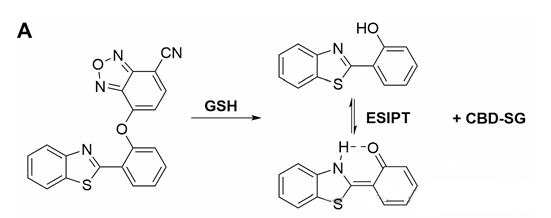
This study reports a fluorescence probe based on cyanobenzoxazole (CBD) for the selective detection of glutathione (GSH) through thiolysis and ESIPT.
It exhibits high sensitivity, adjustable dissociation constant Kd value and biocompatibility, capable of imaging endogenous glutathione, and can be used to distinguish stromal vascular fraction (SVF) cells in a high-fat diet mouse model, which is applicable to obesity research.
Research Background and Challenges
Glutathione is the most abundant small molecule thiol within cells and serves as a core regulator of cellular redox homeostasis. Its imbalance is associated with various diseases such as obesity, aging, and diabetes.
In the research related to adipose tissue, glutathione exhibits complex context-dependent properties.
When obese, the synthesis and secretion of glutathione in fat cells increase, and the elevated level of glutathione can directly inhibit the differentiation potential of fat cell precursors.
The concentration of glutathione varies significantly in different biological compartments, ranging from micromolar levels to millimolar levels.
Therefore, probes with controllable dissociation constants/affinities are required.
However, most existing probes rely on two-step reactions or kinetic differences to distinguish glutathione from Cys/Hcy, lacking high specificity for glutathione at physiological concentration levels.
Research Highlights and Innovations
1. By combining the reaction site of the CBD aryl ether with the ESIPT fluorescent group, the fluorescent group can be released through a selective and specific sulfonation reaction with GSH.
2. By connecting different fluorescent dyes, the dissociation constant can be adjusted. Kd = 0.86 mM
3. Achieve high selectivity for GSH at physiological concentrations, especially at 2 mM GSH and 100 μM Cys/Hcy.
Graphic and textual information
The optical properties of the probe and its response to different concentrations of glutathione.
The figure on the right shows the specific selectivity of glutathione in a mixture of various organisms.
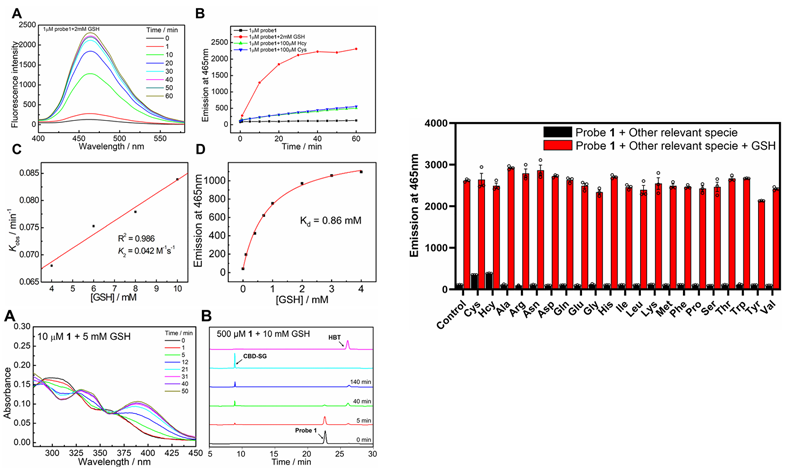
Figure D: Fluorescence titration curves of the probe with different concentrations of glutathione. Nonlinear fitting yields the dissociation constant Kd.
The HPLC chromatogram was used to analyze the reaction between the probe and glutathione.
The results showed that the consumption of the probe occurred simultaneously with the formation of the two products.
By eluting the two products together with the standard substances of HBT and CBD-SG, the mechanism of the thiol decomposition reaction was determined.
Intracellular endogenous glutathione confocal fluorescence imaging in living cells
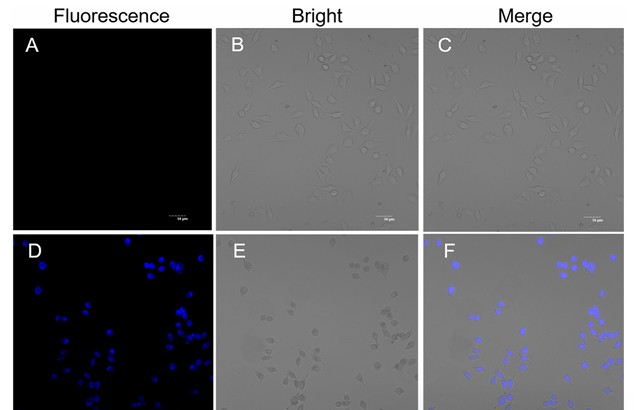
Figures A-C show cells treated with the thiol-blocking agent NEM, which exhibited almost no fluorescence, while the untreated cells showed strong intracellular fluorescence.
Analysis of Glutathione Levels in Senescent SVF Cells
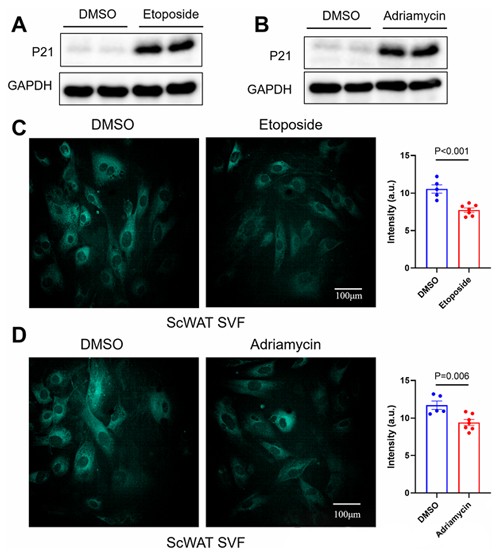
Induce cellular senescence (with increased P21 expression) using Etoposide or Adriamycin.
The results show that the fluorescence intensity of the probe significantly decreases in senescent cells, which can be used to distinguish the aging status of the cells.
By using flow cytometry, the intracellular glutathione levels of cells labeled with probe 1 were analyzed in the stromal vascular fraction (SVF) of subcutaneous white adipose tissue (ScWAT) in mice fed with normal diet or high-fat diet.
Source: https://doi.org/10.1039/d6cc01182a


