
Glutathione triggers reassembly and amplification of NIR-II photothermal effect
Literature Information
Title:
Accelerating Intramolecular Nonradiative Decay via Glutathione-Triggered Reassembly of Semiconducting Polymer Nanoprobes for Activatable NIR-II Phototheranostics
Journals and Types: Angewandte Chemie International Edition, Research Article
Author: Haotong Yin、Xiaofei Miao、Guangzhao Yang、Siyang Yu、Yuquan Ji、Yujing Zhang、Hui Zhou、Wenbo Hu、Ping Li、Chao Yin、Quli Fan
Corresponding author: Chao Yin (Yin Chao), Quli Fan (Fan Quili), Nanjing University of Posts and Telecommunications
Publication date: August 18, 2026 Reception
DOI: 10.1002/anie.2537165
Introduction
When a nanoprobe enters a high glutathione environment, it not only "turns on the light", but also reorganizes itself:
The surface disulfide bonds are broken, and the particle gradually reassembles, converting the excited state energy more quickly into heat and acoustic signals.
The study further links "size changes" to "changes in energy dissipation pathways".
In the research of fluorescent materials, non-radiative decay is often regarded as an energy loss that needs to be suppressed.
However, for photothermal therapy and photoacoustic imaging, this "loss" is actually a usable output:
The more efficiently the excited state converts energy into heat, the stronger the photothermal heating and photoacoustic response may be.
The team of Yin Chao and Fan Quili from Nanjing University of Posts and Telecommunications designed a glutathione-responsive semiconductor polymer nanoprobe SPN0.
It uses glutathione (GSH) in the tumor-related reducing microenvironment as the triggering signal, regulates inter-molecular and intramolecular non-radiative decay through particle reassembly, and has been verified in cells and the 4T1 tumor-bearing mouse model for activated near-infrared II (NIR-II) photoacoustic imaging and photothermal therapy.
Research Background
Semiconductor polymer nanomaterials possess the characteristics of tunable spectrum, good photostability and strong absorption, making them an important candidate material for NIR-II photothermoacoustic diagnosis.
Previous activatable probes mostly relied on changes in absorption peaks, fluorescence or chemical structures, while the energy dissipation within the aggregated state was often generally classified as the "aggregation effect".
The core issue of this work is:
Can microenvironmental response, particle reassembly and non-radiative decay kinetics be linked into a measurable evidence chain?
If so, aggregation will no longer merely be a material state but will become a design variable for regulating photothermal and photoacoustic outputs.
Research Methodology
Probe Construction:
The DPP-TQ semiconductor polymer SP was assembled with the disulfide-containing DSPE-SS-PEG through nanoprecipitation to form SPN0.
Response Mechanism:
Glutathione cleaves the surface disulfide bonds, weakening the PEG stabilizing layer, causing the particles to re-assemble into SPN6, SPN12, SPN18, and SPN24 with the passage of treatment time.
Mechanism Characterization:
The particle size, output, and excited-state relaxation were analyzed by combining TEM, DLS, absorption spectroscopy, photothermal/photothermal imaging tests, and femtosecond transient absorption spectroscopy.
Biological Verification:
The imaging and therapeutic effects of the activation were evaluated using AML12 and 4T1 cells, NEM-depleted glutathione control, and 4T1 tumor-bearing mice.
Research results
A "cutting" process, converting microenvironmental signals into particles and then reassembling them.
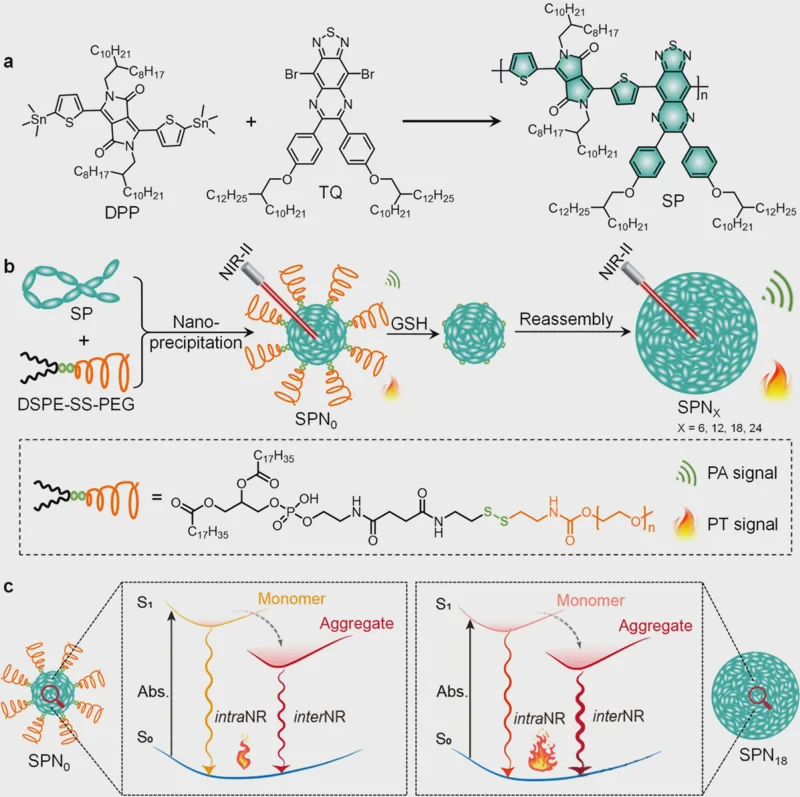
Figure 1 presents the design logic of the entire project.
The semiconductor polymer SP is encapsulated by DSPE-SS-PEG to form SPN0;
When glutathione breaks the disulfide bonds, the hydrophilic stable layer is damaged, and the original particles begin to re-assemble.
The authors propose that the more intimate interactions within the particles can alter the excited-state relaxation, causing the absorbed NIR-II energy to be more inclined to be released through non-radiative pathways, ultimately amplifying the photoacoustic (PA) and photothermal (PT) signals.
It is worth noting that here, it is not to generate a completely new NIR-II absorption peak for the probe, but to use the re-assembly to change the energy flow: the input light remains, but the output mode changes.
From 45.7 to 112.4 nm: reassembly is directly recorded
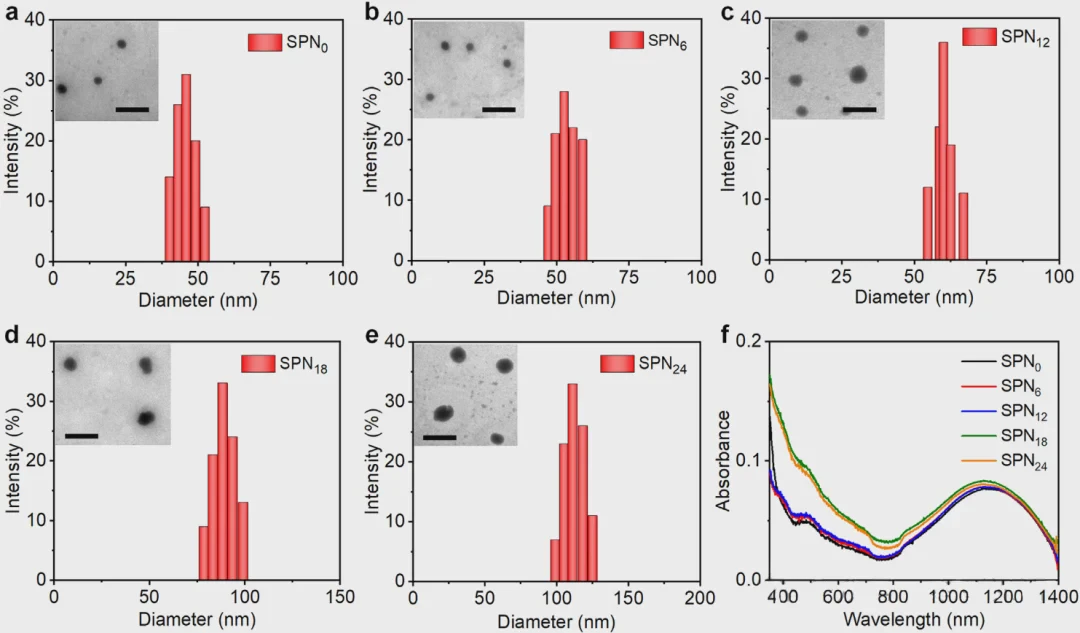
TEM and DLS provided direct evidence of the particle changes.
The average particle size of SPN0 was 45.7 nm;
After 6, 12, 18 and 24 hours of glutathione treatment, the particle sizes increased successively to 53.4, 60.5, 89.2 and 112.4 nm.
Meanwhile, the absorption profiles in the NIR-II region of each group remained similar, indicating that the signal enhancement could not be simply attributed to a significant shift in the absorption band.
The main text of the paper also described three different semiconductor polymer frameworks and a control system without disulfide bonds:
The former showed a similar glutathione activation trend, while the latter did not show an enhanced signal with the passage of treatment time.
These supplementary experiments support the design logic of "disulfide bond cleavage - reassembly - output enhancement";
However, the provided files for this study do not contain supplementary materials, and the related charts have not been independently visually verified.
Non-radiative decay is accelerated, and efficiency of light-to-heat conversion nearly doubles.
Under the irradiation of a 1064 nm laser, the temperature plateau of SPN18 reached 62.1 °C, and its photothermal conversion efficiency increased from 40.80% of SPN0 to 78.67%.
The acoustic signal was approximately 2.5 times that of SPN0. This indicates that the reassembly did indeed direct more light energy towards thermal and acoustic output.
Femtosecond transient absorption (fs-TA) further tracked the energy destination.
All three representative particles exhibited an ultrafast decay component of approximately 0.4 ps, accounting for about 98% of the excited state population.
The authors attributed this to intermolecular non-radiative decay (interNR).
Another slower component was shortened from 36.8 ps of SPN0 to 24.9 ps of SPN6 and 7.3 ps of SPN18, which the authors reasonably associated with intramolecular non-radiative decay (intraNR).
The focus of this work's mechanism is not "only aggregation leads to intermolecular dissipation", but rather that the reassembly simultaneously strengthens the already rapid intermolecular dissipation and significantly accelerates the slower intramolecular dissipation process.
The kinetic changes of the latter are correlated with the enhancement of photothermal effect, although its attribution is still based on transient kinetic fitting and existing models.
NEM reverse validation: Cell effect dependent on glutathione
At the cellular level, the 4T1 cells, when combined with SPN0, exhibited a stronger photoacoustic response and temperature increase;
When the researchers pre-depleted glutathione using N-ethylmaleimide (NEM), these signals weakened accordingly.
The same trend was also observed in cell viability, flow cytometry, and live/dead staining.
For instance, after 8 minutes of 1064 nm irradiation, the 4T1 + SPN0 group rose to 53.1 °C, while the AML12 + SPN0 and 4T1 + NEM + SPN0 groups were 41.6 °C and 44.1 °C, respectively.
This "enhancement - depletion - weakening" reverse control provides functional evidence for the involvement of glutathione in activation.
Mouse model: First enhance imaging, then perform photothermal therapy
In 4T1 tumor-bearing mice, the optical acoustic signal after local injection of the tumor was approximately 1.97 times that of normal tissue.
After intravenous injection of SPN0, the signal in the tumor area reached its peak at 12 hours, which was approximately 3.3 times that of the untreated control group.
Based on this, the study selected 12 hours as the subsequent photothermal irradiation time point.
Under 1064 nm, 1.0 W cm-2 irradiation, the tumor temperature in the SPN0 + light group rose to 50.6 °C within 5 minutes, while that in the PBS + light group was 38.3 °C.
During the 14-day observation, the tumor growth in the SPN0 + light group was significantly inhibited, and the H&E staining of the tumor tissue also showed significant damage.
Mechanism and Implications
This process can be condensed into a continuous mechanism chain:
High glutathione microenvironment → Disulfide bond breakage → Weakening of PEG stabilizing layer → Reassembly of nanoparticles, increase in particle size → Enhancement of intramolecular/intermolecular non-radiative dissipation → Amplification of photothermal and photoacoustic output → NIR-II imaging-guided photothermal therapy.
The methodological value lies in connecting "responsive chemical bonds" with "aggregate excitation kinetics".
Traditional activatable probes usually focus on spectral changes before and after the reaction;
This study suggests that even if the NIR-II absorption profile does not significantly change, strong output can be achieved by regulating the non-radiative decay within the particles.
For subsequent material design, the responsive surface stabilizing layer, controllable reassembly window, and measurable excited-state kinetics constitute a set of transferable engineering framework.
What really needs to be optimized is not only "can it aggregate", but also the aggregation rate, particle size limit, in vivo retention, thermal conversion efficiency, and safety window balance.
Source of paper
Original link: Wiley Online Library
DOI: 10.1002/anie.2537165
Image source: Figures 1-5 from the original paper, copyright owned by Wiley-VCH and the authors; this content is for the interpretation of the research paper only.
Conflicts of interest and data: The authors declare no conflicts of interest; data supporting the research conclusions can be reasonably requested from the corresponding author.
Prev: Glutathione and Antioxidant System
Next: Reduced glutathione is body inherent antioxidant guardian


