
Why is level of human immunity closely related to level of glutathione?
The human body is like a constantly operating city.
The immune system is the guard force within this city. Bacteria, viruses, pollution, stress, staying up late, smoking, and alcohol consumption...
They may not always cause us to fall ill visibly, but they will continuously deplete the body's protective reserves, keeping the cells in a "tense state" for a long time.
When people talk about immunity, the first thing that comes to mind is supplementing nutrition, getting enough sleep, and doing more exercise. These are of course important.
But if we look at it from the perspective of the cells themselves, we will discover one thing:
The strength of the body's defense ability does not only depend on the number of immune cells, but also on whether the "internal environment" where the immune cells are located is stable.
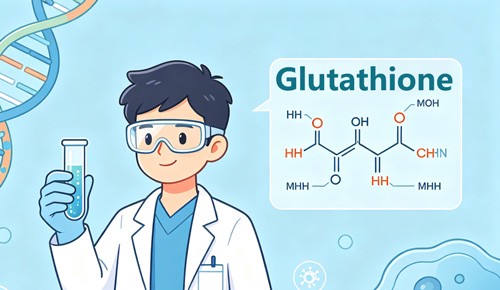
And glutathione (GSH) is an extremely crucial link in this internal environment.
Glutathione is "antioxidant defense system" that cells possess naturally.
During the metabolic process of human cells, "free radicals" - a type of metabolic product - are constantly produced.
A small amount of free radicals is a normal part of physiological activities, but once there is an excessive amount, they will act like small fragments flying around, attacking cell membranes, damaging proteins, and interfering with cell functions.
This state is commonly referred to as "oxidative stress".
If oxidative stress remains high for a long time, cells will become tired and the response ability of immune cells will also be affected.
One of the important roles of glutathione is to help cells neutralize excessive free radicals, reduce oxidative damage, and maintain the stability of the internal environment of the cells.
A stable cell environment allows for stable immune cells; a stable cell environment enables the immune system to function better.
This is the most fundamental relationship between glutathione (GSH) and immunity.
vitality of immune cells depends on a stable internal cellular environment.
The immune system is composed of various cells and molecules.
Their task is not simply to "kill the enemy", but to identify abnormalities, coordinate responses, eliminate harmful substances, and restore calm after the task is completed.
This process is very precise.
When immune cells are activated, they consume energy and produce more free radicals and metabolic products.
If the antioxidant reserves within the cells are insufficient, immune cells may become more exhausted and even experience functional decline after intense work.
The significance of glutathione (GSH) lies in its ability to help immune cells cope with this "cost of combat" - it provides antioxidant support for immune cells, reduces the accumulation of oxidative damage;
It helps maintain the stability of cells, making immune cells more energetic when needed to respond;
It also participates in the metabolism of certain harmful substances, reducing the burden on cells.
Glutathione (GSH) does not replace the immune system's work, but makes the immune system work more calmly.
condition of liver can also affect overall immune system of body.
Glutathione (GSH) is abundantly present in the liver.
The liver is an important organ in the human body for metabolism and detoxification.
The substances ingested, metabolic wastes produced within the body, and various burdens from the external environment all need to be processed by the liver.
During this process, liver cells also face oxidative stress.
Glutathione (GSH) helps liver cells maintain stability, reduces the accumulation of oxidative damage, and enables the liver to better perform its metabolic and detoxification tasks.
When the liver is in good condition, the overall metabolic environment is more stable;
A stable metabolic environment means that the burden on the immune system will also be smaller.
reasons for decrease in intracellular glutathione levels
In reality, many factors can increase the consumption of glutathione (GSH).
Staying up late depletes it, long-term stress depletes it, smoking and drinking deplete it, oxidative stress after intense exercise depletes it, environmental pollution and certain drug metabolism also increase its consumption, and what's more, it's not to be ignored that as people age, the body's ability to synthesize glutathione (GSH) also declines.
When the consumption exceeds the supplementation and synthesis, the body's antioxidant reserves will decrease, the internal environment of cells is prone to imbalance, and the immune system may also become unstable.
Long-term depletion will gradually deplete the body's reserves.
Related products


Related news
-
Glutathione triggers reassembly and amplification of NIR-II photothermal effect
2026-08-31 -
Reduced glutathione is body inherent antioxidant guardian
2026-09-08 -
Bacterial thermosensitive hydrogel synergistically depletes extracellular glutathione to inhibit postoperative tumor recurrence
2026-09-10 -
Dual-enzyme carbon dot nanoenzymes for the detection of glutathione and hydrogen peroxide
2026-09-15
