
Glutathione: A key molecule from biochemistry to anti-aging
As more and more people start to pay attention to topics such as "antioxidation", "improving sleep" and "anti-aging", one name frequently comes up: Glutathione (GSH).
Glutathione is one of the most important low-molecular-weight thiol substances in the body and is regarded as a core molecule for maintaining cell health and delaying aging.
In 2023, a review article published in Ageing Research Reviews systematically summarized the mechanism of action of glutathione and its dependent enzymes from biochemistry to geriatrics.
Provide a clear and comprehensive introduction to the structure, function, metabolic pathways, changes in aging, and feasible strategies for increasing glutathione levels of glutathione.
What is glutathione?
Glutathione is a tripeptide composed of glutamic acid, cysteine and glycine. It has a simple structure but plays a crucial role in the redox homeostasis within cells.
In the vast majority of aerobic organisms, glutathione exists in two forms:
Reduced glutathione (accounting for 98-99%
Oxidized glutathione (a disulfide bond is formed between two GSH)
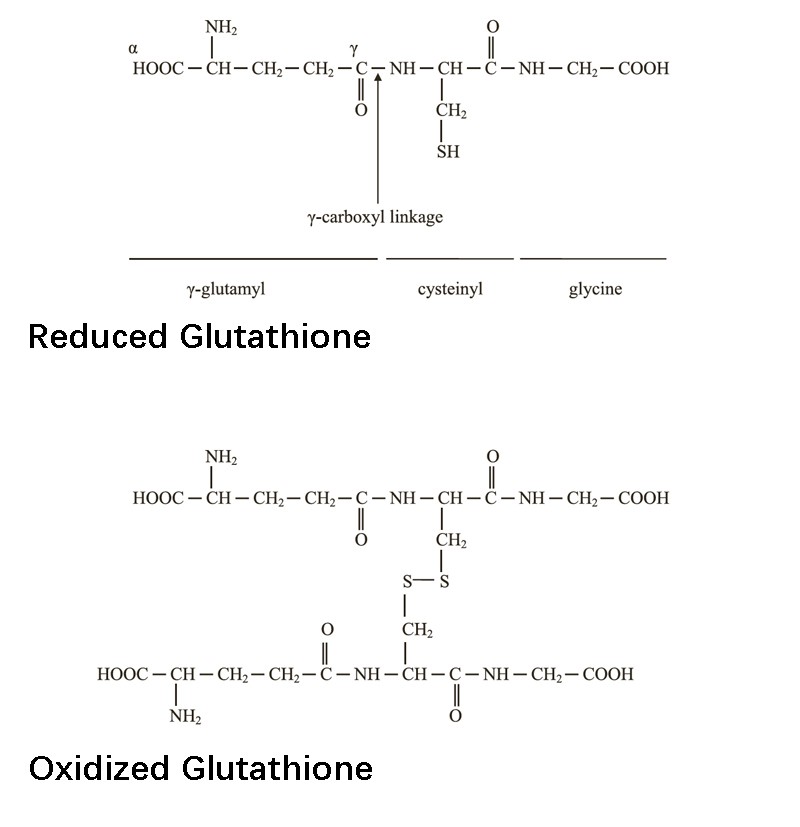
In the body, the reduced state is usually dominant, which ensures that glutathione has a strong electron donor capacity, can neutralize oxides, participate in various metabolic reactions and signal regulation.
Glutathione has the highest concentration in liver cells, reaching up to 10 mM. It is approximately 1 to 2 mM in most cells.
main functions of glutathione
Far more than just "antioxidation"
The literature system has summarized the multiple functions of glutathione in the human body, which can be classified into the following three categories:
Antioxidation and maintenance of REDOX homeostasis
Glutathione itself can eliminate free radicals, but the vast majority of its antioxidant effects come from the synergy with various enzymes, including:
Glutathione peroxidase (GPxs) : Eliminates H₂O₂, lipid peroxides, etc
Peroxy-reduced proteins (Prdxs) : Regulate oxidation signaling and protein folding
Glutathione reductase: Regenerates GSSG into GSH
They jointly maintain the REDOX balance of cells, enabling oxidation signals to be conducted normally without developing into damage.
Detoxification function
Glutathione eliminates harmful substances through two pathways:
Binding with glutathione transferase (GSTs) : Eliminating drug metabolites, environmental toxins and lipid peroxidation products (such as 4-HNE)
Participate in the detoxification of methylglyoxal (MG) and formaldehyde: through the glucose oxidase system and ADH5 enzyme
This means that Glutathione has an undeniable impact on abnormal glucose metabolism, inflammation, cardiovascular health, etc.
Other critical life activities
Glutathione participates in or influences:
- DNA synthesis, gene expression
- The steady state of iron and metal ions
- Protein folding and modification (such as S-glutathiylation)
- Cell proliferation, differentiation and death patterns (including apoptosis, ferroptosis, etc.)
- Immune regulation (such as the functions of lymphocytes and neutrophils)
- Nervous System signal transduction and neuroprotection
- The generation of substances such as hormones, prostaglandins, and leukotrienes
- Regulation of vitamin D status
It can be said that glutathione is almost involved in every key node of cellular life activities.
How is glutathione synthesized and circulated in body?
The metabolism of glutathione is mainly accomplished through the γ -glutamyl cycle.
1. Synthesis: Two steps, consuming ATP
Step 1: Glutamic acid + cysteine → γ -glutamylcysteine (catalyzed by GCL enzyme, it is the rate-limiting step)
Step 2: γ -glutamylcysteine + glycine → glutathione
Among them, cysteine is the most crucial. The activity of GCL enzyme significantly decreases with age.
2. Distribution and Transport
Glutathione can enter organelles (such as mitochondria and endoplasmic reticulum), and also be exported outside the cell.
Subsequently, it is decomposed by γ-GT and others, and then absorbed and utilized by adjacent cells.
3. Regeneration
The oxidized Glutathione is reconverted into GSH through glutathione reductase.
The synthesis, decomposition, output and regeneration processes of glutathione jointly ensure its homeostasis in the body.
Glutathione and Aging: Declining or Rising?
Most studies show that glutathione decreases with age
Studies on experimental animals and human tissues have shown that as people age:
- The levels of glutathione in all tissues generally decreased
- The activity of GCL (a key synthase) has decreased
- Excessive oxidation load consumes glutathione
- Decreased Nrf2 activity (regulating the expression of antioxidant enzymes)
This decline is closely related to cellular dysfunction during the aging process. For instance, a reduction in glutathione in the lens is associated with cataract formation.
glutathione level is actually higher in healthy elderly people
Literature indicates that research has found:
Elderly people in excellent physical and cognitive conditions actually have higher levels of glutathione
This might be related to the adaptive mechanisms associated with longevity
Glutathione levels are both a result of aging and may also affect the rate of aging.
What are ways to increase glutathione levels?
The literature summarizes a variety of potential methods for enhancing glutathione, including nutritional supplementation, lifestyle and functional substances.
1. Provide synthetic raw materials
- Cysteine supplementation: The common form is N-acetylcysteine (NAC)
- Glycine supplementation: It may be one of the limiting factors and can be combined with NAC
- Glutamine: It is converted into glutamic acid to participate in synthesis
Directly supplement glutathione itself
There was once controversy over whether oral GSH is effective, but research shows that:
Certain specific forms (such as S-acetylated glutathione) can increase GSH in blood and red blood cells
Oral GSH has also been observed to be absorbed by tissues in animals
Activate the glutathione-related enzyme system
By enhancing the Nrf2 pathway, the expression of enzymes such as GCL can be increased, for example:
Moderate exercise
Some plant polyphenols and nutrients (such as alpha-lipoic acid)
Nutrients that enhance energy metabolism (such as pantothenic acid promoting ATP production)
influence of lifestyle on glutathione
Regular exercise can enhance the activity of the glutathione system
Certain diseases, chronic inflammation, smoking and pollution exposure can reduce GSH
Antioxidant diets (rich in sulfur-rich amino acids, vitamins, etc.) support GSH homeostasis
Glutathione and "Successful Aging"
The literature regards glutathione as an indispensable part of "successful aging".
- GSH affects healthy lifespan by controlling oxidative stress, lipid peroxidation, inflammation and apoptosis
- Detoxification function is particularly important for long-lived individuals
- The expression levels of enzymes such as GST are positively correlated with the extension of lifespan
- Maintaining a high level of GSH may be an important characteristic of long-lived people
Glutathione is not only an antioxidant but also likely a "hub molecule" that regulates the aging process.
Summary
Glutathione is the most important reducing agent within cells and plays a core role in antioxidation, detoxification, signal transduction, immune regulation, and metabolic homeostasis.
Aging is closely related to the decline in GSH levels, but elderly people in excellent health tend to maintain high GSH levels.
Based on current research, strategies to increase GSH in the body include:
- Supplement the precursor amino acids: NAC + glycine
- Activate the synthase system (such as the Nrf2 pathway)
- Reasonable exercise
- Supplement glutathione appropriately
- A healthy lifestyle and diet
For people who want to improve sleep, enhance energy status, support immunity and reduce oxidative stress, maintaining a good level of glutathione may be of great significance.
Related products


Related news
-
Glutathione is key antioxidant that unlocks anti-aging code
2025-11-25 -
molecular regulatory mechanism of exogenous glutathione in alleviating cadmium stress in alfalfa
2025-11-18 -
What is safety of S-acetylglutathione in food dietary supplements?
2025-11-11 -
What is supplements glutathione?
2025-10-28 -
Modified yeast efficiently synthesizes glutathione
2025-09-29 -
How to take glutathione for whitening to effective
2025-12-09 -
Unveiling Anti-aging Code of glutathione
2025-12-16 -
Liposomal glutathione: Cell-level antioxidant support
2025-12-30 -
What is glutathione?
2026-01-05 -
Glutathione helps detoxify alcohol and protect liver
2026-01-13
