
detoxification champion more powerful than glutathione
The most important detoxifying minerals in the world are not what you might think.
The biggest misconception about detoxification: It's not that you have too many toxins; it's that you simply can't get rid of them!
Have you ever thought like this: "I've been feeling extremely tired and dizzy recently. It must be because there are too many toxins in my body. I need to do a detox immediately!"
Wait a moment! This might very well be a huge misunderstanding.
The problem usually lies not in the "intake" of too many toxins, but in the malfunction of the body's system for eliminating toxins.
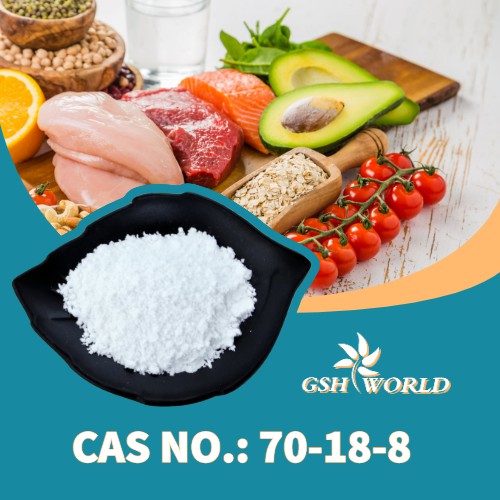
Super detoxifier: Glutathione
If we compare detoxification to a pyramid, then the substance at the very top of the pyramid is glutathione.
Glutathione is the main detoxifying enzyme throughout the human body, but for glutathione to function, it must rely on a certain mineral.
The scope of glutathione's action is not limited to the liver alone. It affects every cell in your body, even in the mitochondria - which are the energy-producing factories of our bodies - where it also performs a large number of important functions.
Glutathione's protective effect on mitochondria is almost greater than that of any other substance. It can neutralize substances such as hydrogen peroxide.
Perhaps hydrogen peroxide is available in the bathroom. When applying it to the wound, you will notice it bubbling and it can also serve as a disinfectant.
However, the body itself also produces hydrogen peroxide, which is used to kill microorganisms and perform other physiological functions. This substance is extremely corrosive.
Therefore, glutathione is needed to regulate it and prevent it from damaging the body's own cells, including the mitochondria.
Glutathione can also protect the mitochondrial membrane, as well as all the cell membranes throughout the body.
Each cell in the body is surrounded by a membrane, and various structures within the cell are also enclosed by their own membranes.
Glutathione can provide protection for all these membrane structures.
Glutathione can also protect the DNA of mitochondria, and at the same time, it can help other antioxidants function more effectively.
Most antioxidants work by cleaning up damage and repairing the body after it has already been harmed.
However, the function of glutathione is to prevent damage from occurring at its source, which is completely different from the effects of other antioxidants.
That is to say, most antioxidants only "clean up the battlefield" after the damage has occurred. However, glutathione takes the initiative to prepare defenses before the damage happens, and thus can prevent the problem from arising at its source.
What will happen to body if there is a deficiency of glutathione?
When the level of glutathione in the body is low, toxins cannot be excreted from the body smoothly. They will be trapped inside and then re-enter the bloodstream, continuing to circulate.
This is why many people experience inexplicable exhaustion, depleted energy, foggy minds (brain fog), and frequent headaches - because behind these symptoms, it is very likely that the level of glutathione is too low.
What is particularly alarming is that individuals following a ketogenic diet or those attempting to lose weight will consume more fat, and the toxins are precisely stored in the fat tissues.
When more fat is reduced, the toxins stored in the fat will be released. So if there is a shortage of glutathione in the body at this time, these toxins will be released along with the fat breakdown, making you feel extremely uncomfortable.
The most important function of glutathione is not so much to protect the liver as it is to protect the mitochondria.
Because many diseases, including cancer, have a direct relationship with mitochondrial dysfunction.
These toxins target the key areas of the mitochondria, namely the electron transport chain. This name may sound complicated, but in fact, it is a part of the mitochondria and is the final step in the production chain of ATP (energy) in the body.
Many toxins cause damage here, disrupting the body's energy production process. At the same time, they also damage the mitochondrial membranes that have this energy generation mechanism.
The result is that people with insufficient glutathione have accumulated toxins in their mitochondria, and are unable to produce energy. But ironically, the process of detoxification itself requires energy consumption.
For those whose body lacks glutathione, this becomes a vicious cycle - without the ability to detoxify, the toxins accumulate even more, making the person feel even worse.
This is why some people feel like they are "taking a bath" in toxins, experiencing severe discomfort all over their bodies, along with inflammation.
So they would have such an idea: Oh my god, there are too many toxins in my body. I must do the detoxification process again.
In fact, you don't really need to do this. What you should do instead is to strengthen your body's detoxification system. Glutathione can help the fat-soluble toxins be excreted from the body smoothly.
Another type of extremely harmful toxin in the body is seed oil. It can trigger a strong inflammatory response and also embed itself into the cell membranes, causing damage.
Glutathione can help prevent the damage to cell membranes caused by these toxins.
How can body produce glutathione on its own?
"Since glutathione is so important, why don't I just take some supplements directly?" Unfortunately, the absorption rate of oral glutathione is extremely low. Once swallowed, it will be quickly broken down.
So, your body prefers that you synthesize glutathione on your own.
So the current question is: How does the human body synthesize glutathione? What substances are needed for its synthesis? How many "raw materials" are required for the production of glutathione:
1. Amino acid:
The main components are cysteine and glycine found in animal meats (especially red meat).
In fact, these two substances are essential raw materials for synthesizing glutathione and can directly assist the body in detoxification.
2. Trace mineral selenium:
This is a very crucial trace mineral. A trace mineral refers to a type of mineral that is required in very small quantities by the body. The term "very small" means it is at the microgram level.
However, selenium is involved in many important physiological processes in the human body. One of the most significant functions is to act as the "switch" that activates glutathione.
Prev: After drinking alcohol, should one take milk thistle or glutathione?
Next: Glutathione Quick Facts
Related products


Related news
-
After drinking alcohol, should one take milk thistle or glutathione?
2026-02-10 -
application fields of glutathione
2026-02-03 -
How can reduced glutathione truly "enter the cells and function"?
2026-01-27 -
Bionic glutathione cycle antioxidant helps achieve efficient full perovskite synthesis
2026-01-20 -
Glutathione helps detoxify alcohol and protect liver
2026-01-13 -
Glutathione Quick Facts
2026-03-03 -
There is a detoxification expert called glutathione in body
2026-03-10 -
Glutathione is crucial for immune response mediated by NK cells
2026-03-17 -
Glutathione is all-purpose small molecule in body
2026-03-24 -
Glutathione: Core Principles for Liver Protection, Pigmentation Reduction and Anti-Aging
2026-03-31
