
How can reduced glutathione truly "enter the cells and function"?
Systematic analysis based on structure, delivery, and cofactor support
So, how can glutathione truly participate in the antioxidant and detoxification processes within the cells?
The answer does not merely lie in "whether it can be absorbed", but rather in whether it is properly designed and truly integrated into the body's metabolic and defense networks in a systematic manner.
If we consider glutathione within the context of cellular operation logic, we will find that: structure, purity, delivery method, and cofactor support are all indispensable.
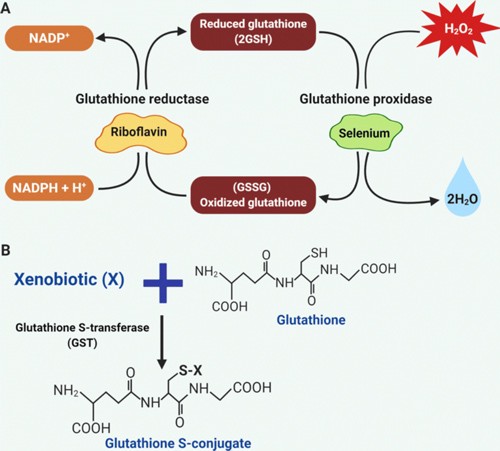
Diagram of Intracellular Oxidative Stress and Glutathione Antioxidant Defense System
substance that truly exhibits biological activity is reduced glutathione (GSH)
From a physiological perspective: The substance that truly participates directly in intracellular reactions and exerts the core biological activity is reduced glutathione (GSH).
GSH can directly act as an antioxidant and neutralize free radicals.
The second is phase II detoxification, where it acts as a necessary cofactor to participate in the glutathione-S-transferase (GST) reaction, binding lipid-soluble toxins into a water-soluble form for excretion.
After completing the antioxidant or detoxification reactions, GSH is oxidized to GSSG (oxidized glutathione).
It is necessary to rely on glutathione reductase and consume NADPH in order to rereduce GSSG back to GSH, thus restarting the next cycle.
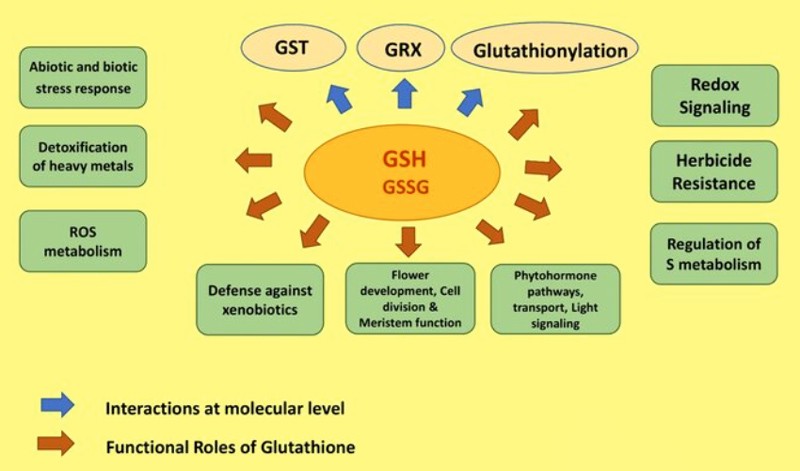
If GSSG is added, the reduction efficiency will naturally be significantly limited.
Directly supplement with GSH, sending the active form that enables "immediate return to work" into the circulation system.
It can participate in the removal of free radicals, detoxification binding, and the regeneration of the antioxidant network more quickly.
Raw material purity: This determines long-term safety and actual utilization rate
At the raw material level, a bio-fermentation combined with membrane separation purification process is adopted.
Compared with the traditional chemical synthesis method, this approach is more conducive to obtaining reduced glutathione with intact structure, higher purity, and better stability. At the same time, it significantly reduces the risks of impurities and by-products.
High purity is not only related to the safety boundaries for long-term use, but also directly affects the "metabolic fate" of glutathione in the body.
The higher the purity and the closer the structure is to the native molecule, the more likely it is to be recognized by cells as a functional participant rather than being quickly broken down and treated as a common protein fragment.
Transmission and Stability: Not aiming for maximum absorption, but reducing ineffective losses
In terms of stability and delivery design, by combining lecithin carriers with lipid-soluble antioxidant protective factors, oxidation loss can be reduced during storage and administration, and glutathione can be maintained in its biologically active reduced state as much as possible.
The core of this design is not merely to "appear to have a higher absorption rate", but to reduce ineffective consumption and increase the proportion of substances that can actually enter the metabolic network and survive, thereby creating realistic conditions for their subsequent participation in intracellular reactions.
overlooked key: supporting role of magnesium in glutathione system
Many people focus on "how much glutathione has been supplemented", but from a biochemical perspective, glutathione is never a molecule that functions independently.
It relies on a highly coupled network of enzymatic reactions, and the stable operation of this network cannot be achieved without the collaborative action of key cofactors. Among them, magnesium is one of the indispensable core regulatory factors.
1. Synthetic end:
During the endogenous synthesis stage, the catalytic process of glutathione-related synthetases requires sufficient ATP. And ATP can only effectively function in the cell when it exists in the form of Mg-ATP complex.
When the magnesium level is insufficient, the efficiency of energy metabolism decreases, directly limiting the synthesis rate and upper limit of glutathione.
2. Recovery End:
During the subsequent recycling stage, oxidized glutathione (GSSG) needs to be reduced to GSH under the participation of glutathione reductase and NADPH. This process also relies on magnesium to maintain the stability and catalytic efficiency of the enzyme system.
Once this process is restricted, even if glutathione is externally replenished, it is more likely to be rapidly consumed and it is difficult to form a stable intracellular reserve.
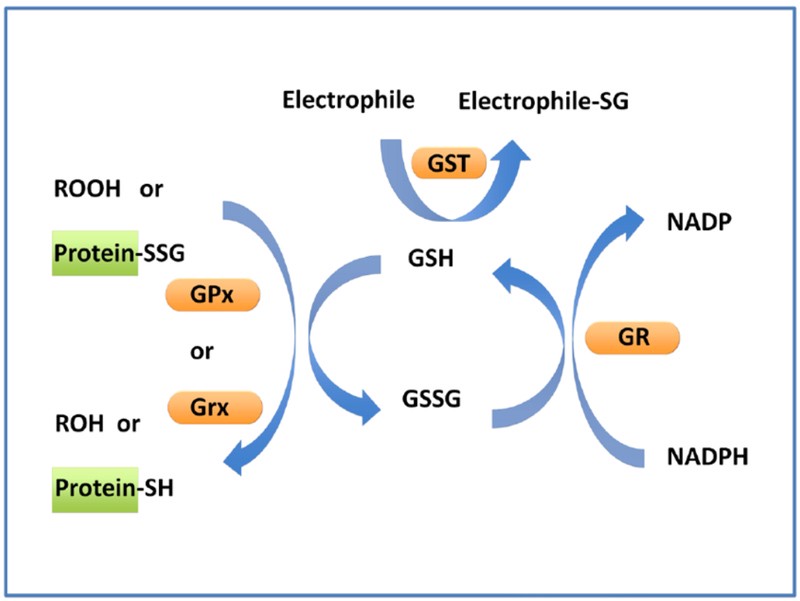
Dynamic cycle diagram of reduced and oxidized glutathione
3. Stress Regulation:
Magnesium also indirectly affects the rate of glutathione consumption by regulating the stress level of the neuro-endocrine system.
Under long-term stress conditions, magnesium deficiency will amplify oxidative stress, making the system more prone to falling into a state where "what is added in can't be retained".
4. In the supplementary form
Glutamic acid chelated magnesium has a more stable absorption and tolerance, and is more suitable for long-term support of the glutathione system in health management.
At the production system level:
The entire process complies with the FDA-verified cGMP quality management standards, achieving quality control and batch traceability from raw materials to finished products, ensuring stability and safety boundaries in long-term supplementation scenarios.
Application scenario: Who is reduced glutathione more suitable for?
Given that there is a high absorption efficiency and the product can be used for a long time, let's look at several application scenarios where reduced glutathione is more suitable.
Application scenarios of reduced glutathione:
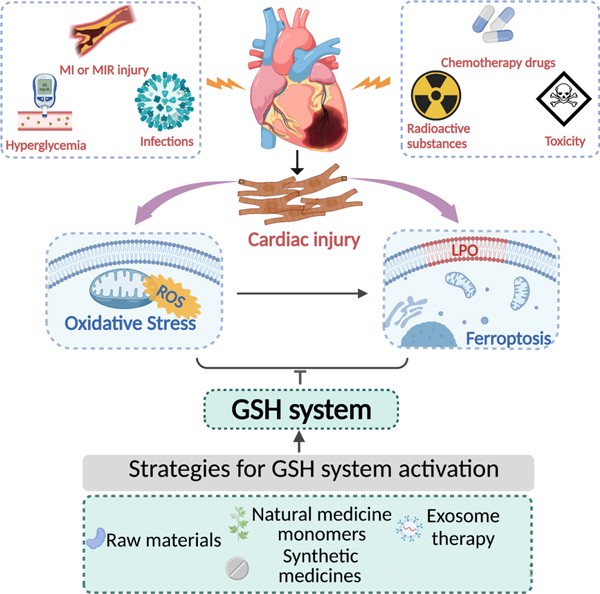
Schematic diagram of the application of reduced glutathione in different health management scenarios
1. Replenish glutathione + Coenzyme Q10
It refers to people who have a habit of staying up late for a long time, are under high pressure at work, and have a high level of mental stress.
Under a state of continuous stress, cortisol levels rise, free radical production increases, and mitochondrial oxidative stress remains persistently high.
Glutathione is extensively utilized to eliminate reactive oxygen species and protect mitochondrial function.
If supplies do not keep up with the consumption, it is likely to result in symptoms such as decreased energy, slower recovery, and poorer sleep quality.
The main significance of supplementing glutathione for this group of people is to provide buffering capacity for the antioxidant and energy metabolism systems.
2. Replenish glutathione + Powerful liver protection and support
People who frequently drink alcohol or take medication for a long time, or those with a high metabolic load.
Whether it is the alcohol metabolite acetaldehyde, or various drugs and environmental chemicals, they all ultimately need to be converted into water-soluble forms that can be excreted through the glutathione conjugation reaction in the liver.
In this situation, glutathione is more likely to be "consumed in the detoxification pathways".
If the reserves are insufficient, not only will the detoxification efficiency decline, but also the oxidative by-products are more likely to accumulate in the body.
In the long run, this will further increase the metabolic pressure on the liver and the entire body.
3. Replenish glutathione + Support for regulation of qi and blood
People with recurrent inflammation and poor immune stability.
During the immune response, a large amount of reactive oxygen is produced to kill pathogens. Glutathione, on the other hand, is responsible for removing excess oxidants during the post-inflammatory stage, promoting tissue repair and restoring immune balance.
When glutathione is insufficient, inflammation tends to "start quickly but end slowly", manifesting as recurrent infections, prolonged inflammation, and elongated repair cycles.
4. Recovery of glutathione + Complementary flavonoids for antioxidant action
People whose skin is aging rapidly and has obvious pigmentation spots.
Skin cells are highly sensitive to oxidative stress. Glutathione not only participates in the regulation of melanin metabolism, but also contributes to the protection of collagen structure and the antioxidant defense of keratinocytes.
When the systemic antioxidant capacity declines, the skin is often one of the organs that shows the earliest external manifestations.
5. Recovery of glutathione + Methylation support
People who are exposed to heavy metals or environmental risks.
Including those who have long-term exposure to polluted environments, smokers, and people exposed to certain occupations, glutathione in the body plays an important role in binding with various metal ions and promoting their excretion.
It is a typical defense-type consumption pathway.
Why is glutathione more suitable to be placed in "basic position"?
Reduced glutathione essentially serves to maintain the body's most fundamental and core cellular defense and repair system.
Unlike antioxidant components that only function in the blood or outside of cells, it directly participates in antioxidant and detoxification reactions within cells, determining whether energy metabolism, immune stability, and tissue repair can operate in coordination.
Also, precisely because it supports this cellular-level fundamental capability, glutathione is more appropriately placed in the "basic position" of long-term health management.
It helps the body maintain a stable state under continuous stress, rather than merely seeking short-term relief.
References:
The role of glutathione in detoxication
PMID: 6339228 PMCID: PMC1569131 DOI: 10.1289/ehp.834959
The antioxidant glutathione protects against enteric neuron death in situ, but its depletion is protective during colitis. The antioxidant glutathione can prevent the in situ death of intestinal neurons, but its consumption during colitis can play a protective role. DOI: 10.1152/ajpgi.00165.2017
Related products


Related news
-
Bionic glutathione cycle antioxidant helps achieve efficient full perovskite synthesis
2026-01-20 -
Glutathione helps detoxify alcohol and protect liver
2026-01-13 -
What is glutathione?
2026-01-05 -
Liposomal glutathione: Cell-level antioxidant support
2025-12-30 -
Unveiling Anti-aging Code of glutathione
2025-12-16 -
application fields of glutathione
2026-02-03 -
After drinking alcohol, should one take milk thistle or glutathione?
2026-02-10 -
detoxification champion more powerful than glutathione
2026-02-25 -
Glutathione Quick Facts
2026-03-03 -
There is a detoxification expert called glutathione in body
2026-03-10
